On every parcel delivered to a home. Money back to the streets. Amazon pays an effective rate of around 7% on roughly £30bn of UK revenue. Temu and Shein ship duty-free from China. High streets close, and towns keep paying rates on empty buildings.
One pound. On the receipt. Spent where you live.
A simple statutory charge on home delivery that puts the cost of convenience back into the places it hollows out.
£1 per parcel, charged to the retailer at the point of sale and printed on the receipt, the same way VAT is.
Free if you collect. Click-and-collect, a locker, a local shop or a parcel counter: no home delivery, no levy.
Ringfenced by law. The money cannot disappear into general taxation. It goes back to the area the parcel was delivered to: 60% to local transport, 40% to markets, town centres and Business Improvement Districts.
Exempt: disability, medical supplies, rural addresses, and any business turning over under £1m.
Pound a Parcel
From a letter to a select committee in five weeks.
Letter to Andy Burnham posted
The campaign starts with an open letter to the Mayor of Greater Manchester setting out the levy, the ringfence and the case for the city region to lead on it.
Lancashire Business View
First coverage. The county's business title runs the case that online giants are under-taxed compared with the traders who pay for the street.
Lancashire Telegraph
The levy leads the Saturday paper, taking the idea from the business pages to readers across East Lancashire.
Lancashire Evening Post
Coverage reaches Preston and central Lancashire, framed around the letter to the Prime Minister and the county figures.
Preston's council leader backs it
Blog Preston reports Cllr Matthew Brown calling the levy "a brilliant idea" he and the Labour Group would be keen to support if it were levied directly on online giants.
Evidence to the HCLG Committee
Written evidence goes to the Commons Housing, Communities and Local Government Committee's Revitalising High Streets inquiry, a week after the deadline.
Late evidence accepted
The committee confirms the submission is in the inquiry's evidence base. The proposal is formally in front of MPs.
Restoring the High Street
The levy is put to policymakers, landlords and town centre managers at a national high street conference.
Labour conference, Centre for Cities
The campaign takes the proposal to the Centre for Cities reception, where the ministers and advisers who could act on it will be in the room.
What a pound a parcel adds up to.
All figures are estimates built on published data and are labelled as such. Click a row for the working.
- Parcels delivered to UK homes each year3 to 3.5bn
- After exemptions and switching to collection, an honest range£2.5bn to £3bn
- Transport for City Regions settlement, for scale£3.12bn / yr
- Amazon, from its share of UK home deliveries£600m to £750m
- Temu and Shein combined~£1bn
- England's 5p carrier bag charge cut single-use bag sales by more than 90%, even though consumers paid it directly.Precedent
- A small, visible cost plus a free alternative changes behaviour. Nobody was banned from anything.Mechanism
- Unlike a tax buried in a price, people see the pound on the receipt and know where it goes.Visibility
The objections, answered honestly.
These are the questions the campaign gets asked most. Some have clean answers. One does not, and we say so.
Some of it will, and that is the point. A visible pound on the receipt is what changes behaviour, exactly as the bag charge did. Anyone who does not want to pay it can collect for free.
Rural addresses are exempt. Where a rural area does pay, the return is weighted back to it, so villages with the thinnest bus services get the largest share of transport funding.
A flat charge with a free way out is not the same as a flat tax. Disability and medical exemptions cover people who cannot collect, and the money funds the buses that lower-income households rely on most.
It is a fixed statutory line collected at the point of sale, in the same way as VAT. There is no profit to shift offshore and no structure to hide behind. If a parcel goes to a UK home, the pound is due.
Businesses with turnover under £1m are exempt. The levy is aimed at the volume players whose scale is doing the damage, not the maker on Etsy or the shop with a website.
This is the honest one. The ringfence would be written into the Act, but a law is only as good as the oversight behind it. The campaign asks for published annual returns by area, so anyone can check where their pound went.
It is £1 per parcel, not per item, and it is not charged on collection. Retailers already vary delivery pricing by speed and basket size; this is one more line, and it is the only one that goes back to your town.
In the papers.
Regional coverage since the campaign launched. Hover a row for the line that landed.
A £3bn letter to No. 10 North
27 Aug 2026The first published account of the campaign: the letter has gone in the post, and here is the case for a pound on every home delivery.Lancashire TelegraphFront page
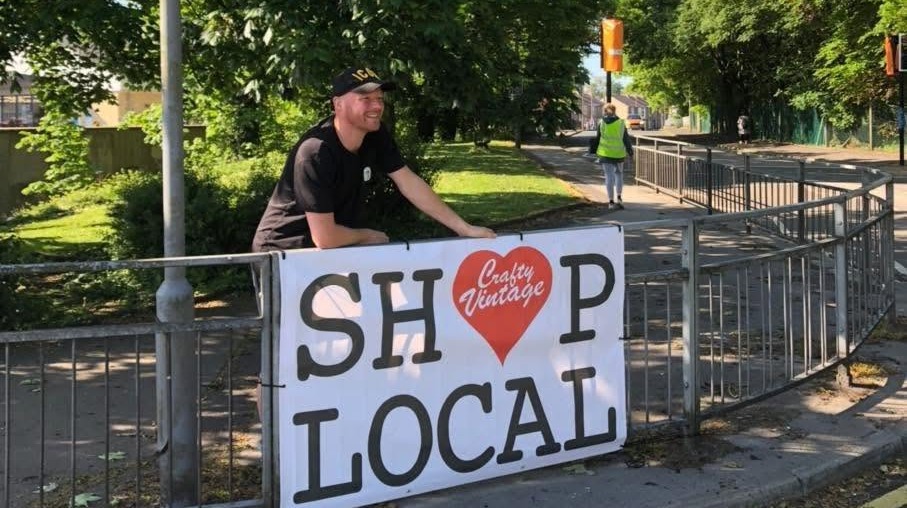
Crafty Vintage suggests parcel levy on big business to PM
29 Aug 2026Delivery feels free, and it is not free. Somebody covers the collapse of the retail base that used to pay for the street.Dan Johnson, quotedLancashire Evening Post
"Put £1 on every parcel": Ribble Valley market founder's call to Prime Minister over Amazon
3 Sept 2026For 20 years we have made staying at home cheaper than walking into town, and then acted surprised when the towns emptied.Dan Johnson, quotedLancashire Business View
Two American states already charge for home delivery. Here is what Lancashire would get.
8 Sept 2026A pound on each is roughly £3bn pounds a year, close to 58m a week and double that in December.Blog Preston
Proposed 'Amazon-tax' could raise £7m per year to support Preston city centre
12 Sept 2026This is a brilliant idea myself and the wider Labour Group would be keen to support if the tax was levied directly on online giants.Cllr Matthew Brown, Leader of Preston City Council
Lost in the supermarket.
Press play.

The convenience is real. So is the bill.

- Every parcel is a journey a person didn't make into town.Fewer journeys mean fewer shoppers, fewer stalls, fewer reasons for a bus route to exist.
- The cost is already being paid.Empty units still owe rates. Councils still sweep the streets. The difference is who picks up the tab.
- Markets and independents can't lobby.Amazon has a public affairs team. A market trader has a Tuesday pitch. This gives towns a funding stream that doesn't depend on winning a bid.
- It has been done.Two US states already charge a per-delivery fee. Both are still in force, and both survived attempts to repeal them.
Two states have already done it.
Retail delivery fees, collected at checkout and remitted by the retailer through the existing sales tax system.
Colorado
- In force
- July 2022
- Year one
- $75.9m
- By 2025
- $218m cumulative
- Status
- Still in effect
Repeal defeated twice
Minnesota
- In force
- July 2024
- Year one
- $59m projected
- Status
- Still in effect
Figures from state revenue department publications as cited in the campaign's written evidence.
It isn't only about town centres.
of 162 Temu products failed EU safety standards in International Consumer Research & Testing's 2025 tests.
Where it comes from
Temu's parent, PDD Holdings, is registered in Dublin. The goods ship from Guangdong in southern China, outside the reach of UK trading standards until they land on a doormat.
What the levy funds
Money raised on cross-border parcels can fund product standards enforcement at the border and in the market, not just town centre regeneration.
Everything on one card.
- What it is
- A £1 statutory levy on every parcel delivered to a UK home, charged to the retailer at the point of sale. Free if you collect.
- What it does
- Raises an estimated £2.5bn to £3bn a year, ringfenced by law: 60% to local transport, 40% to markets, town centres and BIDs.
- Who backs it
- Called "a brilliant idea" by Cllr Matthew Brown, Leader of Preston City Council. Covered by the Lancashire Telegraph, Lancashire Evening Post, Lancashire Business View and Blog Preston.
- What's next
- Written evidence is with the Commons HCLG Select Committee. The campaign goes to Labour conference on 27 September.
The committee is reviewing the evidence now.
Read the submission
The evidence went to the Commons Housing, Communities and Local Government Committee's Revitalising High Streets inquiry. The committee has not yet published written evidence; it will be linked here when it appears.
Go to the inquiryGet updates
Committee progress, conference dates and new coverage, sent occasionally and never sold on.
Sign up for updatesShare this
The quickest way to help is to put it in front of someone who can act on it.